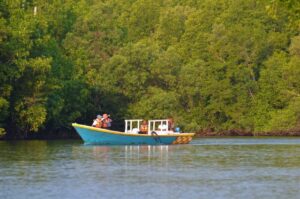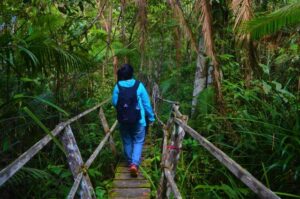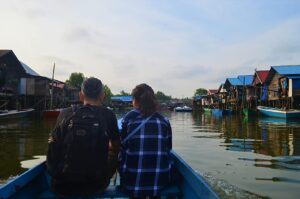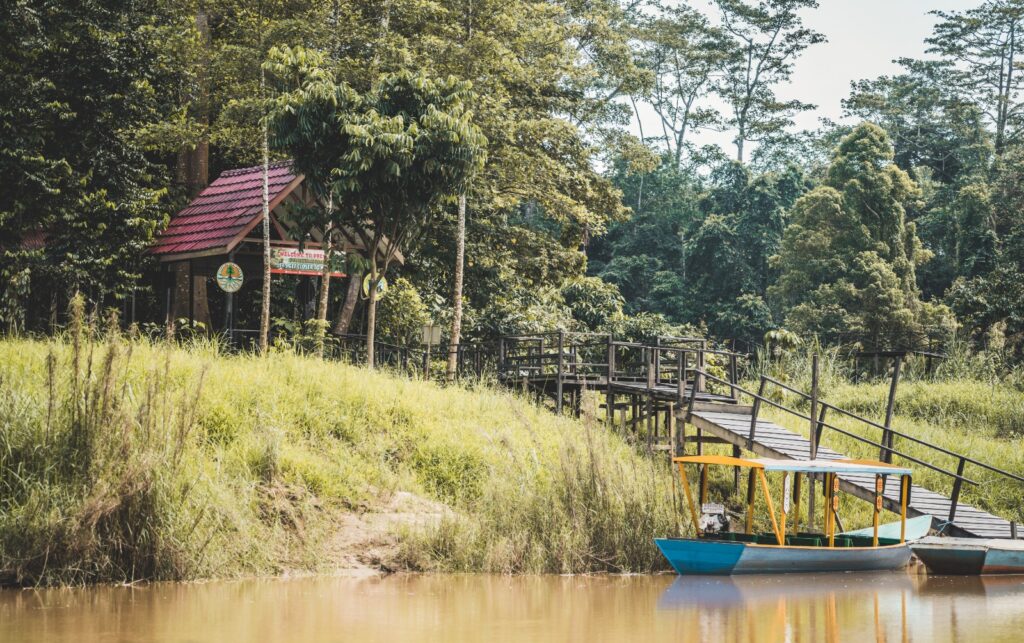
Kutai National Park is a superb conservation area in East Kalimantan that represents a lowland tropical rainforest ecosystem. Kutai National Park is rich in biodiversity and stretches from the coast to the lowlands, making this area important for protecting flora and fauna. The Kutai National Park became known in 1914, when a Dutch geologist, H. Witkamp, wrote about the rich forests in the eastern part of the island of Borneo and finally proposed this area as a wild reserve. Until now, this area still survives and is known as the Kutai National Park.
The clearest way into the universe is through a forest wilderness – By John Muir, naturalist and writer
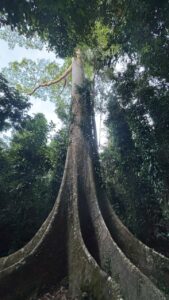 Kutai National Park is home to various types of animals and flora. Several types of vegetation such as mixed dipterocarp forests, limestone ironwood- – meranti forests, mangrove forests and coastal plants, freshwater swamp forests, heath forests and flooded forests when flooded, make the richness of Kutai National Park’s biodiversity spread from coastal forests to lowland forests.
More than 1,200 species of plants live in this area, with typical plants being ironwood (Eusideroxylon zwageri) and species from the Dipterocarpaceae family, such as Meranti (Shorea spp), Keruing (Dipterocarpus spp), and Kapur (Dryobalanops spp) An ulin tree (ironwood) in Kutai National Park has a height without branches of 45 m, a diameter of 225 cm or a circle of 706 cm, and a volume of 150 m3. It is the highest and largest plant recorded in Indonesia.
As well as a variety of plants, Kutai National Park also has a high animal diversity. Primate groups like orangutan (Pongo satyrus), Mueller’s Bornean grey gibbon (Hylobates muelleri), proboscis monkey (Nasalis larvatus), long-tailed macaque (Macaca fascicularis fascicularis), maroon leaf monkey (Presbytis rubicunda rubicunda), white-fronted leaf monkey (P. frontata frontata), pig-tailed macaque (Macaca nemestrina nemestrina), and slow loris (Nycticebus coucang borneanus) can be found in Teluk Kaba, Prevab-Mentoko and Sangkimah.
 The orangutan research station in Mentoko – Kutai National Park is one of the oldest orangutan research stations and has contributed to the development of tropical forest ecology. This area is also a natural laboratory that has attracted students from within and outside the country.

A total of 374 species of birds have been recorded in Kutai National Park, both resident birds and migrant birds that stop by during certain seasons. There are 8 species of hornbills, a type of bird that is a symbol of Kalimantan. In addition, there is also a species of birds endemic to Kalimantan, namely the blue-headed pitta (Hydrornis baudii) which is one of the indicators of Kutai National Park as an important area for birds.
Dozens of species of reptiles including estuarine crocodiles (Crocodylus porous) 195 species of butterflies including the protected Troides Helena, Troides Amphrysus, Trogonoptera brookiana, 32 species of ants, 25 species of frogs, and hundreds of species of insects and other animals that have not been identified live in this area.
Here is one of our client’s reviews about overnight at Kutai National Park. Interest in this trip? Join us now for more adventure.