Betung Kerihun National Park, The Center for Biodiversity
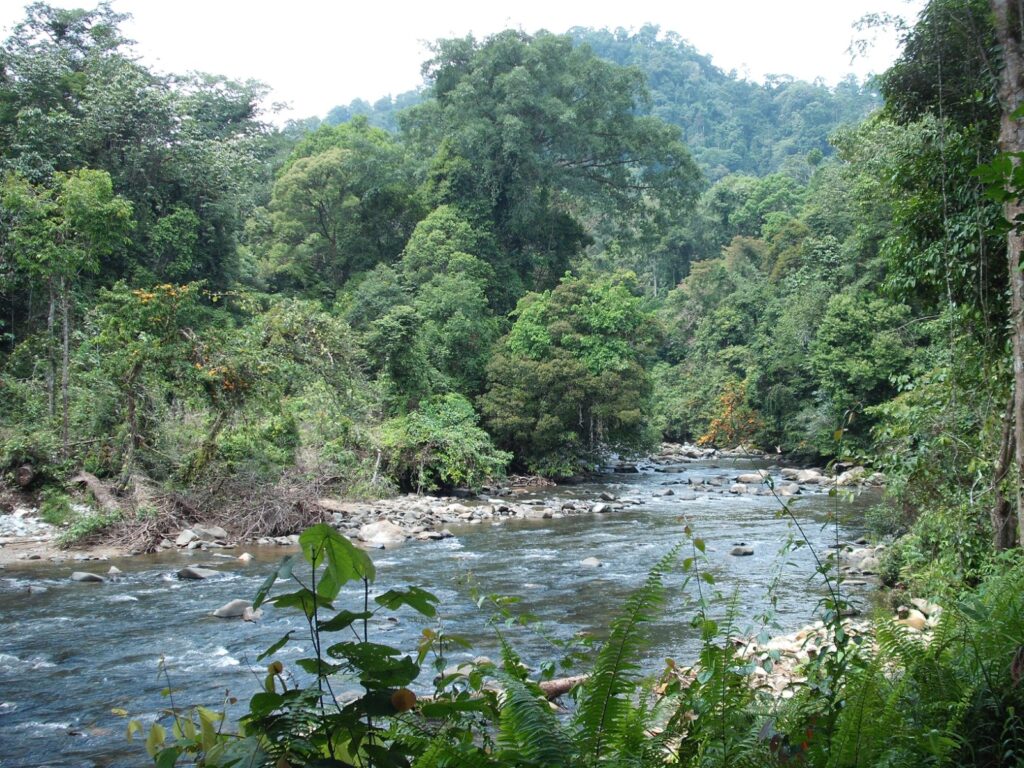
The Betung Kerihun National Park is one of the largest and last remaining pristine stretches of rainforest on Kalimantan Island. Covering approximately 800,000 hectares, the park encompasses a remarkable range of habitats, from alluvial and lowland forests to the mountainous dipterocarp forests of the interior. This vast wilderness supports an extraordinary diversity of flora and fauna, with approximately 70% of Kalimantan’s endemic plant species found within the area.
The Betung Kerihun National Park is also home to an impressive variety of Borneo’s wildlife, including wild orangutans, clouded leopards, gibbons, langurs, deer, barking deer, and mouse deer, many of which roam freely through the forest.
Recognized for its exceptional biodiversity and its important role as the primary source of the Kapuas River, Betung Kerihun National Park has been designated by UNESCO as a Biosphere Reserve. Exploring this remote wilderness offers a rare glimpse into one of Borneo’s most ancient and untouched rainforest ecosystems, with parts of the forest estimated to date back around 140 million years.
The Betung Kerihun National Park is located in Kapuas Hulu Regency – Putussibau, West Kalimantan Province. The parks border Sarawak, East Malaysia to the north, Central Kalimantan Province to the south, East Kalimantan Province to the east, and Sintang Regency to the west. This is also the main route for Cross Borneo trip.
As a tourist destination, the 800,000-hectare national park boasts a captivating array of exotic natural attractions. Visitors can also enjoy a variety of endemic and rare flora and fauna.
The Betung Kerihun National Park also boasts a rich landscape, including rivers, mountains, and even cultural attractions. Before delving into the unique features of this national park, visitors should inquire about access to the park.
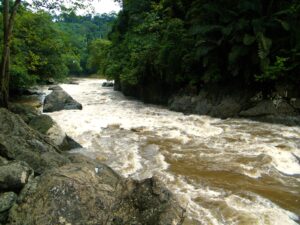
The Betung Kerihun National Park has a tropical climate, with temperatures ranging from 21° to 29° Celsius. During the rainy season, the area frequently experiences flooding, but during the dry season, water flow is somewhat restricted. Meanwhile, the water flow is very large, namely around hundreds of small and large rivers, especially along the Kapuas River flow.
The Betung Kerihun National Park area is divided into eight ecosystem types. These include the lowland dipterocarp forest (tropical woody plant) ecosystem.
Next, the park also includes the dipterocarp hill forest ecosystem, a woody forest species commonly found in tropical regions, and the alluvial forest ecosystem. There are also the old secondary forest ecosystem, the swamp forest ecosystem, the montane forest ecosystem, the limestone forest ecosystem, and the submontane forest ecosystem.
As a primary tropical forest area, the Betung Kerihun National Park plays a crucial role in the survival of various fauna species. Therefore, this area is not only rich in flora but also boasts a diverse range of fauna, some of which are endemic and even rare.
Some endemic plant species in this region include Amyxa pluricormis, the world’s only unique plant (a relative of the agarwood tree and its own genus), Castanopsis inermis, Neo uvaria, Shorea peltata, Chisocheton caulifloris, Eugenia spicata, Lithocarpus phillipinensis, Acuminatissima, and the Musa banana.
Furthermore, this area is known to have 89 orchid species and 48 mammal species. These include the sambar (Cervus sp.), the rabbit (Tragulus napu), the otter (Lutra sumatrana), the clouded tiger (Muntiacus muntjak), and the golden barking deer (Mutiacus atherodes).
Meanwhile, the Betung Kerihun National Park also boasts more than seven primate species, including the tarsier (Tarsius bancanus), the owl (Presbytis frontata), the crested macaque (Hylobates muelleri), the seaman (Presbytis rubicunda), the Bornean orangutan (Pongo pygmaeus), the macaque (Macaca fascicularis), and the macaque (Macaca nemestrina).
Of course, the Betung Kerihun National Park offers many other unique features, from nature tourism to cultural tourism. For example, visitors can experience the diverse cultures of the Kayaan Dayak people. Among the Kayaan Dayak people, visitors can witness traditional Dayak ethnic clothing, arts (dance, music, and singing), traditional food and beverages, and the making of Mandau (mandau) and tattoos.