The Longhouse Lamin Mancong is one of the oldest longhouses in West Kutai, East Kalimantan Province. One such village in Jempang District, Mancong Village – Mahakam River, is renowned internationally for its magnificent longhouses. Lamin Mancong, or Lamin Adat Dayak Benuaq Kampung Mancong, is known locally as Lou’ Mancukng. This village, bisected by the Ohong River (Ohokng) is predominantly inhabited by the Dayak Benuaq Ohokng Sangokng community, a traditional community located in Jempang District, West Kutai, East Kalimantan. This community is divided into two villages: Muara Tae Village and Mancong (Mancukng) Village.
The Ohong River, which flows through this village, is the lifeblood of the indigenous community in this area, ultimately giving rise to the name of the Dayak Benuaq Community. The term Sangokng is the name of the Lamin (household name) also used by this community, hence the name Dayak Benuaq Ohokng Sangokng Community
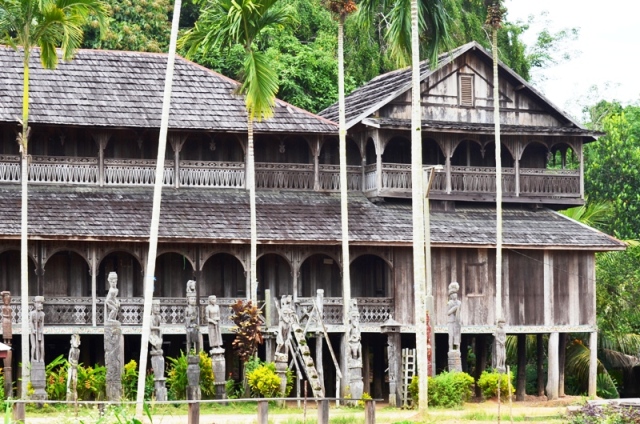
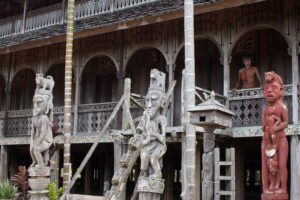
The Longhouse Lamin Mancong designated a West Kutai Cultural Heritage Site through Regent Regulation No. 8 of 2013, is the only two – story Lamin in West Kutai. This traditional house covers approximately 1,005 square meters. there are several statues to the size of Dayak for example the statue of a man with a dog, female, or any other form that looks semi-abstract.
Most of the structure is constructed of Ulin wood, a native Kalimantan wood known for its strength, longevity, and high price. The roof is shingled, and dozens of Blontakng (wooden figures) stand proudly in the Longhouse Lamin Mancong courtyard. Blontakng are carved Ulin logs used to tie up water buffalo during the Kwangkai (traditional funeral ceremony). Inside, there are 24 rooms, 12 on each floor.
Although no longer occupied as a residence, Longhouse Lamin Mancong has undergone expansion and is still used for various traditional rituals, such as Berinukng (consultation), Beliatn (healing), Kwangkai (death), and traditional weddings.
Each room is owned by an heir or descendant of the Lamin’s founder, Tumenggung Baang. The Longhouse Lamin Mancong was built around the early 20th century AD.
It is said that according to the belief Dayak, wooden sculptures indicate the number of buffalo have been slaughtered in the event Kwangkai. Kwangkai it is a ritual tribute to ancestors credited all his life by family members. In other words, the statue signifies a buffalo which they slaughter. To prove the truth, buffalo skull also still be seen in the Longhouse Lamin Mancong.
There are many domestic and foreign tourists visit to see the Longhouse Lamin Mancong at Mahakam River Tour and are welcomed according to traditional customs. Tourist will be greeted with traditional dances, there’s the Gantar Dance, the Gong Dance, and the Beliatn Bawo Dance. Besides the dances, there’s also a blowpipe attraction that offers a unique experience for tourists.
Source: Muhammad Kadapi