Immersive Things To Do At Kutai National Park
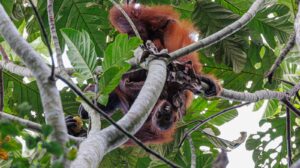
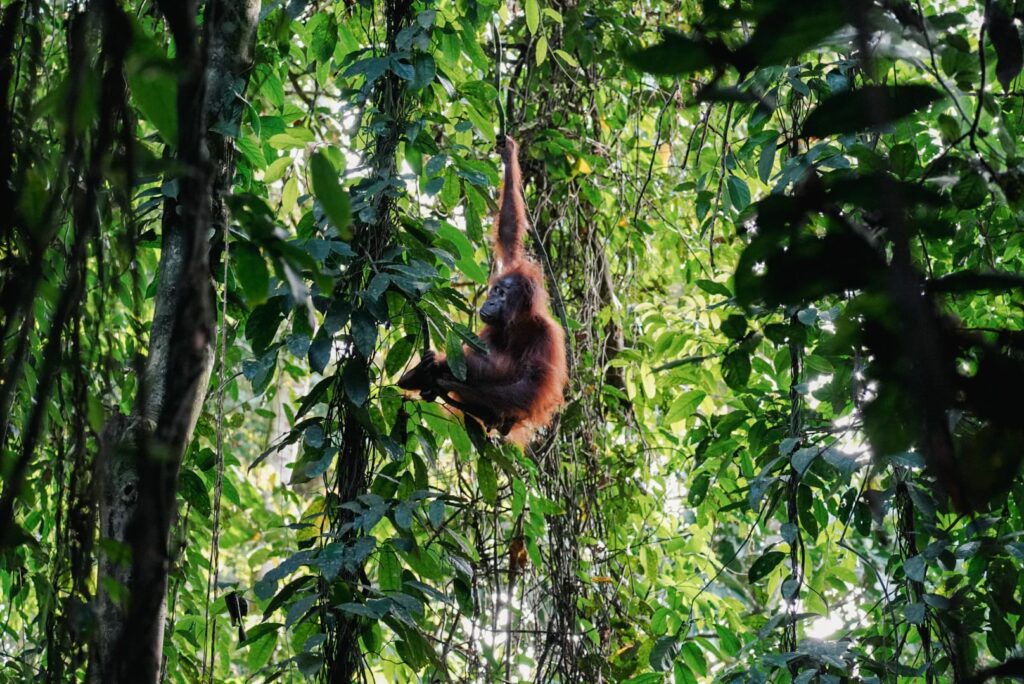
The Prevab site is the natural attraction in Kutai National Park, which is located in East Kutai Regency and near the banks of the Sangatta River, at the northern boundary of Kutai National Park. This quite hidden tourist attraction is the habitat of the only great ape in Asia, namely the orangutan. The orangutan in Kutai National Park is the morio subspecies orangutan (Pongo pygmaeus morio) which is a subspecies of orangutan in eastern Kalimantan. The existence of wild orangutans in their natural habitat has attracted the interest of many tourists.
Observe the Orangutan Activities
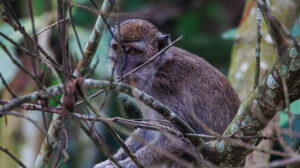
An adventure tour at Kutai National Park with the main attraction of Prevab Natural Tourist Attraction is the orangutan observation. Tourists can also enjoy the beautiful scenery of the lowland tropical rainforest, which is a habitat for various types of animals. We can also see long-tailed monkeys. On this route, tourists can see the difference between forests that are still good and forests that have been burned. Therefore, this area is also suitable for researching natural forest succession.
Experience The Trekking Day & Night
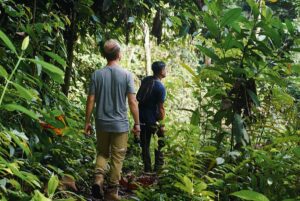
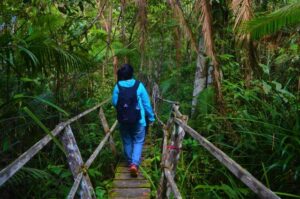
Explore the jungle at Kutai National Park to find orangutans must be guided, divided at two times, it’s morning and afternoon trekking. Tourists must be guided by the ranger forest, considering that the observation route is a research route and to find orangutans often have to enter the forest and not follow the existing path.
The morning trek usually starts after sunrise and lasts until noon. Tourists will be invited to observe orangutans that have just come out of their nests and follow their activities until the orangutans rest around noon. The tourists will also be invited to explore the forest while enjoying the unique flora and fauna. One of them is visiting the Sengkuang tree (Dracontomelon dao)
The afternoon trek starts around 15:00 until dusk. Tourists can observe orangutans start to be active again after resting. Usually, orangutans will eat or move from tree to tree until dusk arrives when they prepare to make a nest to rest at night.
Furthermore, the night in Kutai National Park is not just for enjoying dinner and continuing to rest accompanied by the sounds of nocturnal animals. When during the day tourists can admire the behavior of orangutans, the night also offers the beauty of the forest wrapped in darkness.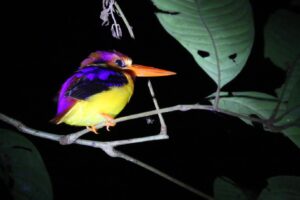
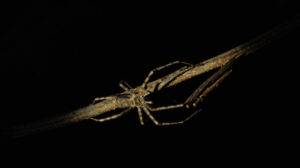
Night in Kutai National Park is a night of exploration. The attraction offered on the night exploration is the observation of tarantula spiders. Tourists will be invited to follow the paths along the forest to visit the tarantula holes. The various types of birds that are resting, such as the fire kingfisher (Ceyx erithaca), green pitta (Pitta sordida), and blue-headed pitta (Hydrornis baudii) will complete the beauty of the night exploration in Kutai National Park. Usually, night exploration starts around 7:30 p.m. to 9 p.m.
Orangutan Morio
Orangutans are great Asian apes that inhabit forests and are arboreal (live in trees). Orangutans are divided into 3 species, namely Pongo pygmaeus (Borneo orangutan), Pongo abelii (Sumatran orangutan other than Tapanuli), and Pongo tapanuliensis (Tapanuli orangutan). Pongo pygmaeus is divided into 3 subspecies, namely Pongo pygmaeus pygmaeus (West Kalimantan), Pongo pygmaeus wurmbii (Central Kalimantan), and Pongo pygmaeus morio (Sabah and East Kalimantan, including those living in Kutai National Park).
Orangutan Morio has blackish brown fur with the largest jaw and the smallest brain. This orangutan is able to survive in extreme conditions, such as long droughts, limited food and less movement. Kutai orangutans were first studied by Peter S. Rodman (California University, United States) in the 1960s in Mentoko, Kutai National Park. Then by Akira Suzuki (Kyoto University, Japan) in the 1980s until 2012 in Prevab, and since 2009, Anne E. Russon (York University, Canada) has been studying orangutans in Mentoko and Prevab.
Orangutans Living In The Kutai National Park
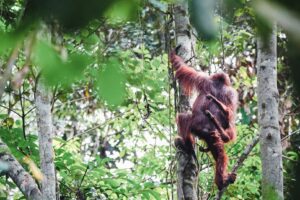
To make it easier to remember each individual orangutan, researchers in Kutai National Park give names to the orangutans that are the objects of research. Some of the orangutans living in Prevab include Tanjung and his children: Dekong, Danau, Bayur, Deng, and a child who disappeared before being named; Bumi and Bulan, Bayur’s children; Mawar and her children: Labu, Buyung, Jantung and an unnamed baby; Langit and Luna, Labu’s children; and males whose mothers are unknown, such as Male Raja, Male Upas, Nangka, Dao, Male Sumbing, Gio, Arang, Lola, Daus, Ulin, and Clinton.